Scott Marsh played six instruments. He made strangers feel like lifelong friends. He was “physically incapable” of being mean to others according to his dad and brother. He listened. He cracked jokes through chemotherapy and walked his dog between gasping breaths because, as his partner Jessica Murphy put it, “that’s just who he is.” When […]
Hamilton Health Sciences (HHS) is expanding medical interpretation services for its patients and families thanks to a $900,000 commitment from the RBC Foundation. Medical interpretation platforms using on-demand video and audio services are currently being used to support patients and families in all in patient, emergency and diagnostic areas within the hospital. This donation will make it possible to expand this technology to over 300 ambulatory (outpatient and clinic) services across all sites, as well.
“This medical interpretation technology will help ensure that everyone involved can ask questions, resolve confusion, and have a clear understanding of the patient’s needs and plan of care,” says Maria Artuso, VP Commercial Services, Greater Hamilton, RBC.
“Recognizing that approximately 27 percent of Hamilton residents have a first language other than English, this service is key to help provide inclusive health care for patients.”
As one of Ontario’s largest and most comprehensive health-care organizations, Hamilton Health Sciences recognizes the importance of equity, diversity and inclusion in delivering exceptional care to our diverse community of 3 million people. When it comes to interpretive services, Hamilton Health Sciences previously relied on in-person interpreters or phone services, however, these were time-consuming and often unavailable in a timely manner. This medical interpretation solution provides on-demand video and audio interpretation at the bedside – in less than 20 seconds on average – and in 240 languages, including American Sign Language.
People are at their most vulnerable state when trying to access health services, and the inability to speak in their native tongue to clinicians is an incredibly challenging barrier,” says Anissa Hilborn, CEO of the Hamilton Health Sciences Foundation.
“So, we’re extremely thankful to the RBC Foundation for this donation that will help us overcome this barrier and create a more seamless experience when accessing health care in our community.”
Areej’s journey began when she was pregnant with her third child, facing the challenges of preeclampsia. Though she delivered a healthy baby boy on November 24, 2022, she was hospitalized for an additional 10 days due to complications related to the preeclampsia. In the weeks following her return home, concerns arose when her stomach began growing again, defying the natural postpartum trajectory. As her stomach continued to grow to the point that she was in excruciating pain she returned to the emergency room.
At intake, seeing Areej’s abdomen distended like she was nine months pregnant and listening to her complaints of acute pain, the doctor’s first thought was that Areej was in labour.
“I was like, no no, we just did this. There’s no way it’s labour,” says Areej.
An ultrasound uncovered a much more profound issue: two masses on her ovaries and significant fluid buildup. The fluid was drained and tested, culminating in a diagnosis of ovarian cancer.
In January 2023, Areej underwent a complete hysterectomy, with surgical intervention extending to her abdomen, liver and spleen. Three weeks of recovery paved the way for a determined battle against cancer through six rounds of chemotherapy that lasted through June. Now on maintenance therapy with ‘No Evidence of Disease,’ Areej hopes that this two-year regimen of maintenance medication will keep her cancer-free.
Areej’s journey was buoyed by a robust support network. Her family, especially her husband, sister and mother, played a crucial role in managing the challenges of surgery, chemotherapy and caring for a newborn. Areej especially drew strength and inspiration from her mother, a cancer survivor who underwent radiation therapy for breast cancer at the Juravinski Cancer Centre, throughout the grueling treatment process.
Areej acknowledges the exceptional care provided by Hamilton Health Sciences, specifically recognizing Dr. Nica and her team. She emphasizes the empathetic and genuine care she received, highlighting the pivotal role of compassionate support in her journey.
This autumn, Areej found herself not only a survivor but a beacon of hope for her community. In October, Areej united her community to partake in the Illuminight, and fundraised $1859, an amount that eclipsed all other fundraising teams.
Areej’s triumph is more than a personal victory. Her story stands as a testament to the strength of community and the unwavering dedication to ensuring the best possible care for those bravely confronting the challenges of cancer.
Heaton’s ninth wedding anniversary was unforgettable, but not in a way he hoped.
The back pain that had started a few weeks earlier when lifting a heavy bag of mulch had escalated to the point of agony. Despite the celebratory day, his husband insisted they get this checked out.
Heaton assumed he’d pulled a muscle. The doctors at his local emergency department weren’t so optimistic. He rushed him to Hamilton General Hospital for an emergency MRI. The scan revealed a spine riddled with lesions. Doctors sent Heaton for an urgent consultation at Juravinski Cancer Centre.
Emergency intervention
Heaton went directly from his initial consultation to the radiation suite. Within days he had his first consultation with Dr. Hira Mian, a hematology oncologist. She soon determined that Heaton had multiple myeloma, a rare type of blood cancer. As one of Canada’s leading multiple myeloma researchers, Dr. Mian knew it needed to be treated immediately and aggressively. If all went well, the best intervention would be a stem cell transplant.
Fortunately for Heaton, he was in the right place. Juravinski Hospital and Cancer Centre is a world leader in stem cell transplants and one of only three Ontario hospitals offering all forms of adult stem cell transplants.
Transplant and recovery
Dr. Mian put Heaton on an intensive 20-week course of chemotherapy in preparation for the transplant. “The chemo experience is not fun,” he says. He was taking as many as 50 pills in a day and feeling incredibly weakened. “But people in the chemo suite do everything to make it as comfortable as possible.”
Eventually, the chemo reduced the tumours enough to schedule an autologous stem cell transplant. For this procedure his own stem cells were collected, stored and then reinfused back into his body to attack the multiple myeloma.
“The process itself is grueling,” says Heaton, remembering the initial weeks post-transplant when he felt so nauseous that the taste of water was more than he could bare. But over the course of the next six weeks, Heaton went from feeling the worst he had ever felt in his life to quite normal.
Ongoing support and commitment
Today, Heaton’s life is mostly back to normal – with the exception of a firm prohibition on lifting gardening mulch. “My husband won’t allow it,” he jokes.
While landscaping is off the table, Heaton is proud to have traded in his walker for a back brace and to be back up to a rigorous 10,000 steps a day.
He credits his progress to the exceptional care he received at Juravinski Hospital and Cancer Centre. “You’re going through a difficult situation with people who really care,” he said, emphasizing that everyone he encountered at the Hospital was warm, professional, competent and had a knack for injecting a healthy dose of humour with masterful timing. “My experiences have been nothing short of outstanding because of the team at the hospital.”
Heaton’s cancer is currently being suppressed by a daily drug regimen. He is closely monitored by Dr. Mian and her team at Juravinski Hospital and Cancer Centre. Multiple Myeloma is a highly recurrent cancer. Heaton describes the current state of his cancer journey as an intermission rather than remission – relapse is almost inevitable. When this drug regimen stops working – whether that’s in two years or 15 – Heaton will need a new treatment regimen. His journey with Juravinski Hospital and Cancer Centre is far from over.
“I’m in a life-long relationship with the team at [the Cancer Centre],” says Heaton. “They’re keeping me alive and will always be part of my life, and that’s beautiful.”
For his part, Heaton is fully committed to this long-term relationship. His work raising funds and awareness with the Myeloma March underscores his commitment to support the team that has taken such diligent care of his health.
“I strongly believe that charitable giving is your opportunity to say thanks,” he explains. “And if you’re dealing with cancer and have all these people helping you, you’ll want to say thanks, again and again.”
When six-year-old Lyla was diagnosed with leukemia earlier this year, her family’s world changed overnight. She began treatment immediately.
Lyla’s parents, Danielle and Jason, had been looking for a run or walk to support cancer care when they discovered MacKids Walk & Wheel. The fact that it supported their own hospital made the decision easy. On March 23, they created the fundraising team Lyla the Laser Beam, setting a modest $100 fundraising goal. Just two weeks later, they had raised over $11,000.
“We’re honestly overwhelmed by the support,” says Danielle. It started with friends and family, and quickly grew as those friends and family shared it with their own friends and family.
Lyla is now several weeks into treatment, and her family hopes she’ll be able to join them at MacKids Walk & Wheel next month with her four-year-old brother Cameron. “She’s a brave little girl,” says Danielle.
Team Lyla is still fundraising, and still inspiring. “Even if you’re just getting started,” Danielle says, “your community will show up for you.”
Meet Team Lyla’s Laser Beams!
Soon to be seven-year-old Lyla is busy battling leukemia but that hasn’t stopped her and her family from bringing their community together to support the hospital that’s become her second home!
They set a $100 fundraising goal for MacKids Walk & Wheel. They asked their friends and family to support. Their friends and family spread the word and two weeks later, they’d raised more than $10,000.
Fundraising can be simple – and incredibly powerful. Your support makes a difference for kids like Lyla.
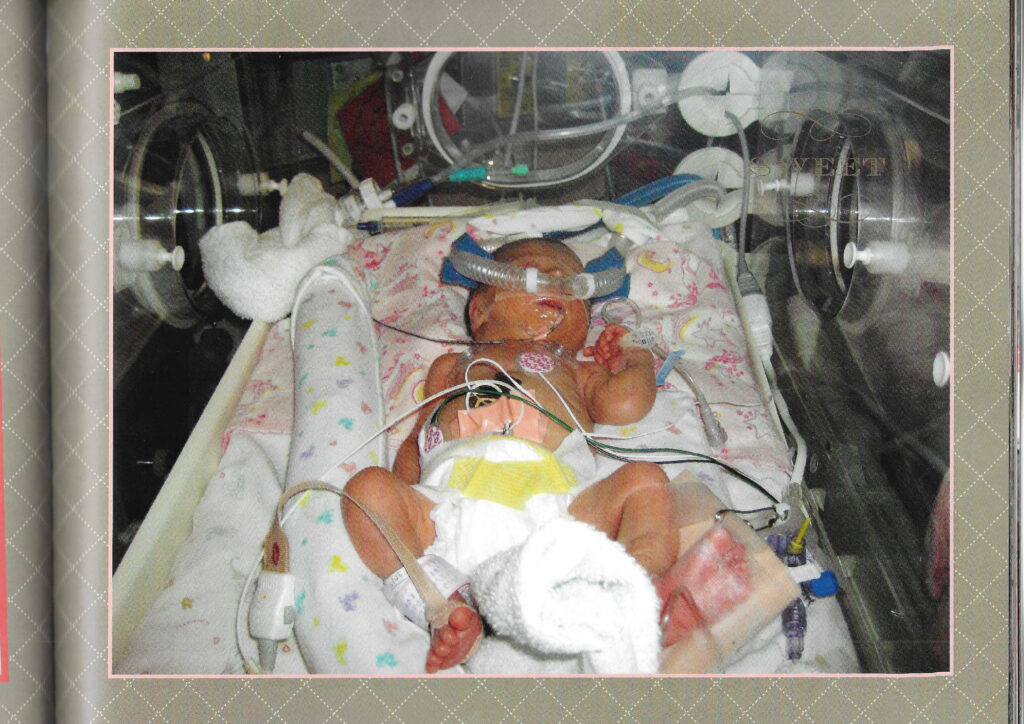
When Kerisha went into labour with her daughter Sloane at just 26 weeks, she was terrified.
Sloane’s umbilical cord had ripped, and both their lives were at stake. For Kerisha, it was hectic and traumatic, but there was no time. Sloane needed to come out right away. Within minutes of arriving at McMaster Children’s Hospital, Kerisha had an emergency C-section.
When every second counted and Kerisha didn’t know if her precious baby would survive, the McMaster Children’s Hospital team saved Sloane’s life.
Just 1.5 lbs at birth, Sloane was also born with extensive orthopedic issues affecting her legs.
“Her feet were up in her face,” says Kerisha, remembering meeting Sloane for the first time in the NICU the day after she was born. “She opened her eyes, grabbed my finger and held it so tight and from there, I was just like, I’m gonna do whatever I can to help her.”
And from that moment, Kerisha did just that. So too did the team at McMaster Children’s Hospital.
For the first year and half of her life, Sloane’s legs were in splints and casts to help straighten them. Extensive physiotherapy and occupational therapy at Ron Joyce Children’s Health Centre, the child rehabilitation hospital that is part of McMaster Children’s Hospital offering outpatient services, were the next big steps in helping the tiny, but resolute Sloane get where she wanted to go.
“She’s very strong and determined,” says Kerisha. “She’s never taken no for an answer and I think that’s helped her get as far as she has.”
Now five years old and in senior kindergarten, Sloane has made incredible progress. Despite being warned that she might never walk, she is now walking on her own and with the support of a walker. Every day she continues to make great strides.
When Carolyn arrived at Hamilton General Hospital for knee surgery earlier this year, she didn’t realize she was about to make history.
She was the first patient at the hospital to receive surgery with the new, donor-funded robotic arm.
The state-of-the-art robotic arm technology is used for joint replacement procedures, offering unmatched precision and accuracy. For patients like Carolyn, who required a partial knee replacement, this kind of donor-funded equipment makes a world of difference.
Carolyn’s knee pain had been worsening for a couple of years, and by early 2024, it was severely impacting her life. An avid gardener and active grandparent, she found herself sidelined. “I’m very hands-on in our business,” she explains. “My husband and I work together in design and build, and the pain really limited me last year.”
After a referral to orthopedic surgeon Dr. Dale Williams, Carolyn was diagnosed with severe arthritis localized to one side of her left knee. That made her an ideal candidate for a half-knee replacement, and for the newly donated robotic arm system.
While robotic-assisted surgery might seem intimidating, Carolyn says her confidence in Dr. Williams helped put her at ease. Her concern about having the robotic arm involved in her surgery was “only a fleeting thought; a millisecond of doubt,” says Carolyn. “Then it just made heaps of sense. It was a phenomenal opportunity that I was looking forward to.”
And the benefits are clear. The robotic arm uses detailed imaging to map out a surgical plan with incredible accuracy. This allows for smaller incisions, preservation of healthy tissue and ligaments and more consistent results. For Carolyn, that meant a smoother procedure and a remarkably fast recovery.
“Four days post-surgery, I was already seeing my physiotherapist, and she said that the bend in my knee was where she usually expect patients to be weeks later,” she says. By seven weeks post-op Carolyn was back to normal.
Carolyn credits the expertise of Dr. Williams, the support of her care team and the advanced technology made possible by donors. “I’m the beneficiary of someone’s generosity, and my gratefulness is immense,” she says. “It’s so worthwhile to support the hospital if that’s something you have the means to do. Helping others is such a wonderful gift.”
Thanks to donor-funded innovations like the robotic arm, patients like Carolyn can regain mobility, reduce recovery time and get back to living life on their terms. Hamilton General Hospital is a regional leader in orthopedic surgery, offering patients access to cutting-edge tools and expert care teams who are pushing the boundaries of what recovery can look like. None of this would be possible without the generosity of donors who continue to invest in the latest medical technology and help bring world-class care closer to home.
Months of uncertainty and the search for answers turned McMaster Children’s Hospital into a home away from home for little Tristan and his parents, Heidi and Rob. But through it all, one thing remained constant for his mother Heidi, “there’s no other place I’d rather be.”
Heidi’s connection to McMaster Children’s Hospital began before Tristan was even born. Six months into her pregnancy, an ultrasound revealed genetic markers that required further investigation. Testing and routine monitoring at the Hospital followed, though the exact nature of Tristan’s condition remained unclear.
Tristan was healthy and squalling when he arrived on September 16, 2017, but his early days were complicated by clubbed feet that required immediate attention at McMaster Children’s Hospital’s Fracture Clinic.
However, the most life-changing moment for Tristan’s family came when he was four months old and began having seizures. Heidi vividly recalls how, despite initial dismissals at her local hospital, she trusted her instincts and took Tristan to McMaster Children’s Hospital’s Emergency Department. There, her concerns were validated within hours.
A life-changing diagnosis
“I was terrified,” recounts Heidi. “But at the same time, I knew that I’m in the best place possible, and the doctors and all the nurses, they care and they make you a top priority.”
An MRI revealed Tristan had polymicrogyria, a condition in which the brain develops too many folds, affecting vital functions. The condition affects each person differently. For Tristan, polymicrogyria affects his oral-motor function including speech, swallowing and breathing. The seizures were a direct result of this condition, which also caused cerebral palsy and global developmental delays.
“It was a life-changing day,” Heidi recalls.
While the diagnosis was daunting, Heidi and her family felt reassured by the dependably compassionate and expert care provided at McMaster Children’s Hospital.
A team that cares
Tristan’s care team at McMaster Children’s Hospital includes neurologists, surgeons and other specialists who have worked collaboratively to address his complex needs. “Everybody works together. The doctors talk to each other, which has been amazing,” Heidi shares. From managing his seizures to performing surgeries for his tonsils, adenoids and hips, the Hospital’s team of experts in every field of pediatric health care have been there every step of the way. “They’re always focused on making Tristan as comfortable as possible. Everybody wants the best for him and they want to see him thriving.”
Sometimes, the journey of helping Tristan flourish was challenging. Over time, Tristan’s limited oral function made it increasingly difficult for him to gain weight and take medication. But Heidi and Rob were reluctant to move him to a gastronomy tube (g-tube). A g-tube is a medical device inserted through the abdomen directly into the stomach to provide nutrition, fluids and medication to people like Tristan who cannot eat or swallow by mouth.
Initially, Heidi was apprehensive about the procedure and administering tube feeding for her son, but she was also realistic about what was needed to improve his wellbeing. She and Rob had a long conversation with the surgeon who would install the g-tube. They received training on how to use and clean it and were assigned a nurse to support them anytime they ran into trouble, day or night.
With the g-tube, Tristan quickly gained weight, improving his health and happiness and affirming to Heidi that they had made the right decision. “Not all changes are bad. That was a terrifying one but now that we have it, I couldn’t imagine life without it,” she says.
Tristan’s spirit is unbreakable. He’s always smiling, giving high-fives to his doctors and eager for new adventures, showing everyone what he’s capable of – including, most recently, skiing.
“He loved it. He was over the moon,” Heidi beams, talking about the sit-ski program Tristan was finally able to join after a two-year wait.
Heidi credits the team and Hospital for their role in Tristan’s achievements. They genuinely care about him and celebrate every success with us, she says. “When we walk into the hospital, we know we’re in the best place possible.”
Changing lives through generosity
Behind every story like Tristan’s is the generosity of donors who support McMaster Children’s Hospital. Donations enable the hospital to invest in advanced technology, specialized training and innovative treatments that improve the lives of children and their families.
From the equipment used to diagnose and treat Tristan’s condition to the multidisciplinary team that coordinates his care, donor funding has played a critical role. “I feel extra lucky that we’re just blessed to have this care and to have everybody want the best for your child and just to see them thrive,” she says.
Every year, Heidi and her family channeled their gratitude into action by hosting Tristan’s Fall Fair, an annual event that raises funds for organizations that have supported Tristan’s journey. What started as a small first birthday party has grown into a large community celebration at their family farm, attracting dozens of attendees. Last year, the generosity of Tristan’s friends, family and neighbours went to support MacKids.
Heidi explains, “Our friends and family are so, so generous, and then it just infectious, right? It all started for Tristan, and while it’s still about Tristan, we’re able to help other kids like him too.”
Heidi and her family remain optimistic about the possibilities that lie ahead, inspired by Tristan’s determination and the unwavering support of McMaster Children’s Hospital. Together, they are eager to put every opportunity in front of Tristan and let him show everyone what he can do. And he wants to do it all.
In May 2023, just as he began a new job with CN Rail, Kofi was involved in a life-altering accident. Kofi and three colleagues were in a taxi when the side of the vehicle where Kofi was sitting was hit by a driver running a red light. One moment Kofi was chatting with his colleagues, the next he was waking up in a haze of pain and confusion.
“I realized I couldn’t move my legs, and I felt this really sharp pain in my neck,” Kofi recalls. “I couldn’t feel my body. That’s when it hit me, that I was paralyzed.”
Kofi was rushed to the hospital and soon learned the extent of his injuries. He had broken three vertebrae and suffered severe compression on another. His left clavicle and humerus were also fractured from the devastating collision. His recovery would be long and challenging, but Kofi’s determination never wavered.
“I didn’t wanna accept the fact that I was paralyzed,” says Kofi. “All I kept thinking about was my family.”
After spending nearly three months in hospital, Kofi began his journey at Hamilton General Hospital’s Regional Rehabilitation Centre (RRC), a facility specializing in complex rehabilitation services for patients with traumatic injuries like Kofi’s. This marked a new phase in his journey—one focused on regaining as much mobility and independence as possible.
When Kofi arrived for his first day of therapy at the Regional Rehabilitation Centre, his physiotherapist, Diana, confidently told Kofi that she was going to have him walking – not one day, but that very same day.
“I give her a look like, you must be crazy,” remembers Kofi.
But sure enough, with the help of a comprehensive set of equipment, Diana and the team got Kofi standing and taking his first few assisted steps within a few hours.
At the Regional Rehabilitation Centre, Kofi was introduced to a range of therapies and assistive devices designed to help him relearn to walk. One piece of equipment that would soon play a transformative role in his recovery was a brand new, donor-funded exoskeleton.
Conventional physical therapy for patients like Kofi involves gradually reintroducing walking motions to help the brain relearn movements, often taking months or years. Exoskeletons are battery-powered robotic suits that assist individuals to stand and walk by triggering muscle and joint activation in the legs, even when the connection between the brain and muscles is damaged.
“The exoskeleton helped me stand tall again,” Kofi shares. “It was a game-changer.”
Introducing the exoskeleton was a pivotal moment in Kofi’s rehabilitation journey – and it wouldn’t have been available without donor generosity.
When Kitty retired from a long and fulfilling career in medical research in June 2020, she was looking forward to spending time with her family, friends – especially her soon-to-be-born grandson. She began this new chapter of her life with an extended summer holiday at the family cottage in Rondeau Provincial Park. Despite the sudden abundance of rest and relaxation those first months of retirement, Kitty was exhausted. She experienced a fatigue she couldn’t seem to shake.
At first, she thought the exhaustion was just part of adjusting to retirement after a busy career. But then she noticed an increasing number of small but growing lumps under her skin on in many areas of body. She called her family doctor, who ordered a series of tests and biopsies. Post results, she was seen at the Juravinski Cancer Centre extremely quickly.
By October, Kitty was staring down a diagnosis of stage four malignant melanoma, leaving her and her family devastated. Her first grandson was soon to be born but meeting him was far from assured.
Melanoma, a form of skin cancer, often starts with suspicious spots on the skin. In Kitty’s case, however, the primary tumor was never found. The cancer had spread inside her body, with tumors even reaching her brain. From the moment she arrived at Juravinski Hospital and Cancer Centre, everything moved very quickly. She saw a surgeon and an oncologist. Her oncologist, Dr. McWhirter immediately started her on immunotherapy.
“I was assured by my oncologist Dr. McWhirter and surgeon Dr. Heller that immunotherapy has worked very well in a lot of people,” says Kitty. “For the stage of melanoma that I had, there really was no other option. I wanted and needed to start treatment immediately!”
Immunotherapy is a groundbreaking treatment that uses the body’s immune system to fight cancer. For patients like Kitty, this treatment, made possible by donor-supported research and clinical trials, can mean the difference between life and death.
In addition to immunotherapy, Kitty met with Dr. Greenspoon who oversaw her Cyberknife® treatment to treat two small lesions in her brain. The Cyberknife® offers an advanced form of targeted radiation therapy that delivers high doses of radiation with extreme precision. There are only three Cyberknife® units in all of Canada, and, once again thanks to donor generosity, one of them is at Juravinski Hospital and Cancer Centre.
Thanks to the cutting-edge treatments she received, Kitty has been able to watch her grandson grow, something she wasn’t sure would be possible after her diagnosis. “Here I am, almost four and a half years later, and I never thought I’d still be here,” she reflects. “The expertise care and treatment that was provided to me by my oncologists and their team, has given me time for which I am forever grateful.”
Today, as Kitty continues her journey, she remains an advocate for prevention and early detection of melanoma. She’s also quick to share the importance of donor support.
“I am alive today due to all the previous research that was done before my diagnosis as well as the state-of-the-art equipment in place at that time,” she says, adding that, while you might not need these innovations today, supporting their development and implementation could be what saves your life down the road.
“Donations allow continuation of research, purchasing of new equipment and funding for patient and families programs. Donations enable cancer centres like the Juravinski to provide care that can save, prolong and improve lives. This is so vitally important.”
Your gift to support Juravinski Hospital and Cancer Centre helps ensure that patients like Kitty continue to have access to advanced care, innovative treatments and more time to create cherished memories with their loved ones. Donate today and make a difference in the lives of patients in your community.
Once a dedicated health care worker herself, Jacqueline’s life took an unexpected turn when she suffered a devastating injury. It was a crisp winter morning on February 20, 2023, when Jacqueline fell and broke her hip. The accident left her unable to continue her work and forced her to embark on a journey of recovery.
Initially receiving care at Juravinski Hospital, Jacqueline’s condition improved enough to warrant a transfer to St. Peter’s Hospital (SPH) on March 12. It was at St. Peter’s Hospital that she found solace and hope within the Restorative Care Unit, a place where her life would take a remarkable turn.
From the moment Jacqueline arrived, she felt an instant connection with the team at the Restorative Care Unit. “I have a lot of friends here,” she would often remark, highlighting the warm and welcoming atmosphere. The therapists, in particular, earned her praise, as they went above and beyond to ensure her recovery journey was both effective and personalized. “The therapy people are great,” she would exclaim with a smile. “If you have a problem, they’ll try this or that to help you. I feel that they not only care about their work, they care about me personally.”
The team at the Restorative Care Unit took pride in treating each patient with dignity and respect, and Jacqueline recognized this. She appreciated their sensitivity to her needs, noting, “They are very conscious of my dignity.” In her spare time, Jacqueline indulged in her love for reading, often devouring a book every other day. To her delight, a member of the cleaning staff noticed her passion and generously offered her his own book. Whether it was murder mysteries or historical romances, Jacqueline found comfort and escape within the pages.
As Jacqueline continued her journey towards recovery, she discovered the vibrant personalities and passions of her fellow patients and the dedicated staff. Her newfound friend, who shared a love for plants, inspired her to split an overgrown plant in a hanging basket. The simple act brought joy not only to Jacqueline but to those around her as well. “They’re always looking for things to do that will interest you,” she happily shared.
Throughout her time at the Restorative Care Unit, Jacqueline experienced ups and downs, as anyone on a healing path would. But the team was unwavering in their commitment to her well-being. On the days when she felt discouraged or overwhelmed, they would offer to postpone an activity or find an alternative solution. “They care. They show respect. They’re willing to do anything you ask,” Jacqueline professed with gratitude. “I sometimes call them angels or treasures.”
With every passing day, Jacqueline’s strength, balance and coordination steadily improved. Starting off in a wheelchair, she progressed to a heavy-duty walker and eventually transitioned to a regular one. Encouraged by her therapists, she roamed the building freely, relishing the newfound sense of independence. In the therapy room, she conquered challenges she never thought possible. Climbing stairs, once an arduous task, became a triumph. “They’ve got me climbing stairs,” she shared with pride. “That’s something you don’t give any thought to. I used to back down the steps because it was the only way I could control my body. Well, now I’m turning around and going down the regular way, sometimes just one step at a time, other times at a normal, one step after the other fashion.”
Jacqueline eagerly engaged in various exercises, including those on a stationary bicycle, as she prepared to regain the movements necessary for her regular life. With the help of the dedicated therapists, she practiced day in and day out, determined to reclaim her independence.
Behind Jacqueline’s transformative journey stood the impact of generous donors who recognized the significance of the Restorative Care Unit. Their contributions not only provided essential equipment and resources but also enhanced the quality of care and the recovery process. Their support facilitated the personalized approach that Jacqueline cherished, enabling her to regain her strength and rebuild her life.
As Jacqueline’s time at the Restorative Care Unit drew to a close, she reflected on the incredible progress she had made. It was a journey filled with camaraderie, determination and the unwavering support of the caring professionals who had become her extended family. With gratitude in her heart, she stepped into the next chapter of her life, forever touched by the generosity that had given her a second chance.