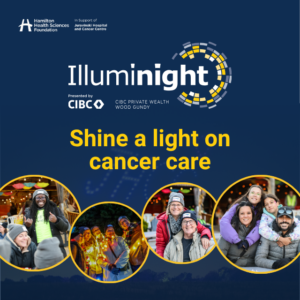
Join us on November 28, 2026 for an unforgettable winter experience where our community comes together to take the plunge, embrace the challenge, and support life-changing care for patients and families at Hamilton General Hospital.
Hamilton Health Sciences (HHS) burn experts are the first in the world to use a novel biological treatment to save the face of a young woman who was severely burned in a London, Ontario house fire last December.
The treatment used exosomes – tiny particles released by cells that carry signals from one cell to another to help coordinate rapid healing and tissue repair and reduce inflammation. The particles are collected, typically from lab-grown cells, and injected into the injured areas to accelerate healing – much more so than the current standard of skin grafting, which can leave scarring and a patch-like appearance.
Exosomes have been studied for years as part of burn research, but not yet in humans. Clinical trials involving humans have used exosomes for other types of wound healing, with promising results.
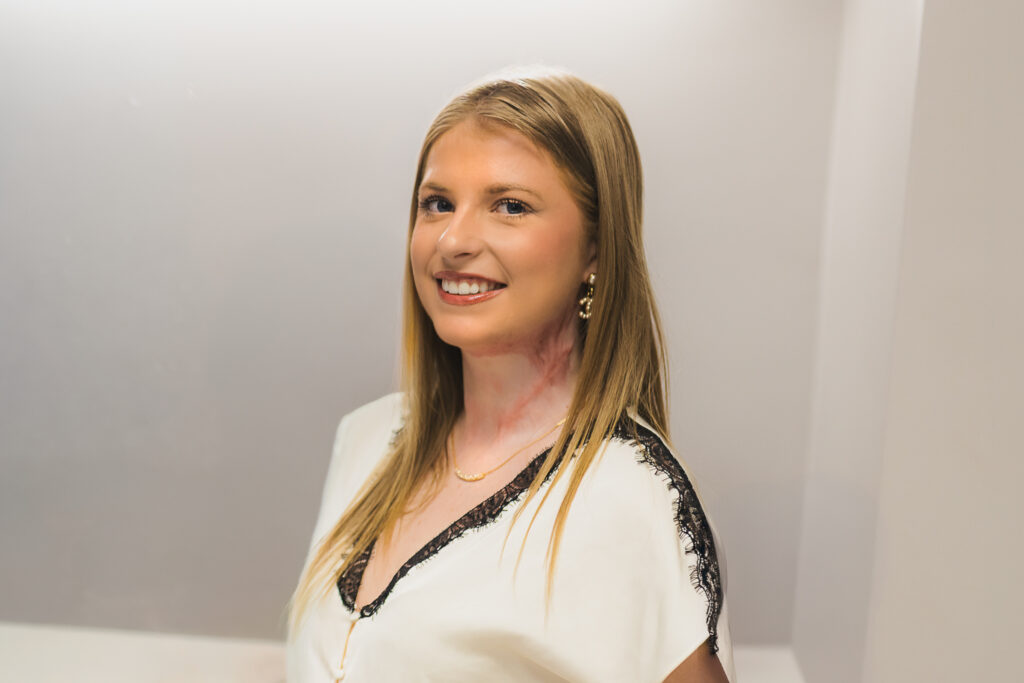
Western University student Kaitlin Jeffrey, 18, of Toronto, received the innovative treatment and healed faster, and with better results, than another young student whose burns from that same fire were serious, but not as severe. The other student wasn’t a candidate for exosome treatment because their injuries did not require skin grafting.
“My vision for Kaitlin was to avoid skin graft surgery to her face and neck at any cost,” says Dr. Marc Jeschke, vice president of research and innovation at HHS, burn surgeon and researcher, and a global authority on burns, who performed Jeffrey’s surgery. Dr. Jeschke is also a professor of surgery at McMaster University, HHS’s key academic partner.
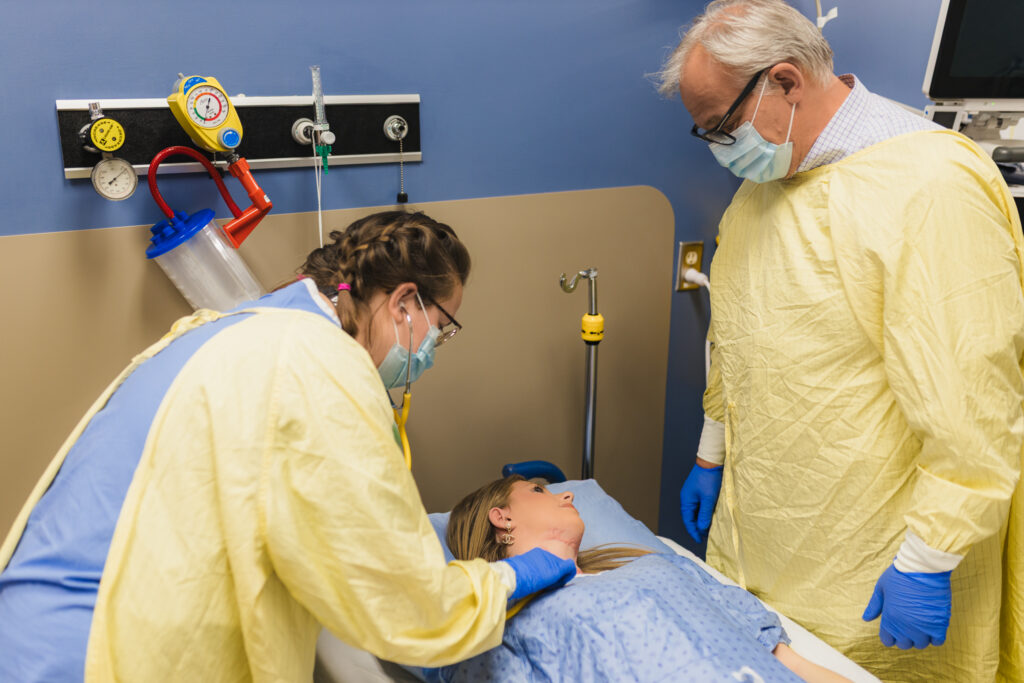
Dr. Jeschke is also the medical director of the regional burn program at HHS’ Hamilton General Hospital – one of Ontario’s two regional burn centres where the most seriously injured patients in the province are treated. Co-located on the Hamilton General Hospital campus is HHS’ Centre for Burn Research, where teams are leading medical advancements and research into burn treatment, including exosome therapy.
After getting the green light from Jeffrey and her parents, Jeschke sent an urgent application to Health Canada to try exosome therapy on compassionate grounds. Receiving no objection, Jeschke and his HHS team became the first in the world to perform this treatment on a burn patient. Jeffrey’s two treatments, which took place several days apart, used one trillion exosomes sourced from the United States.
“You can do the best graft on the planet, but you won’t return the skin to normal. And, for a young person, a skin graft to the face and neck can be absolutely devastating,” he says.
“It’s honestly a miracle,” Jeffrey says of results with respect to her face. “Being injured in the fire has also had deep impact on my mental health, and it’s something I’m continuing to deal with. But having such good results, particularly to my face, is helping me move forward.”
Jeffrey and her family are extremely grateful to Dr. Jeschke and the entire burn centre team.
With further research, Jeschke hopes the world-first treatment will become the new standard of care for burn patients in Canada and beyond.
“Like Dr. Jeschke, my family and I would love to see exosome therapy become the standard of care for patients like myself in Canada, so that when horrific things happen, it doesn’t change people’s lives forever,” says Jeffrey.
Kaitlyn’s story is just one example of what’s possible when groundbreaking research meets donor support. Help fund the next breakthrough.
Join us on September 25, 2026 for an evening of family-friendly fun that brings our community together to honour loved ones and friends while supporting world-class cancer care and research at Juravinski Hospital and Cancer Centre (JHCC).
When Cynthia’s sister delivered a premature baby years earlier, it planted a quiet instinct that never quite left her. So when she became pregnant, she chose to deliver at McMaster Children’s Hospital (MCH). “I just felt like that was the better hospital for our family to have a baby,” she recalls. Her intuition was correct.
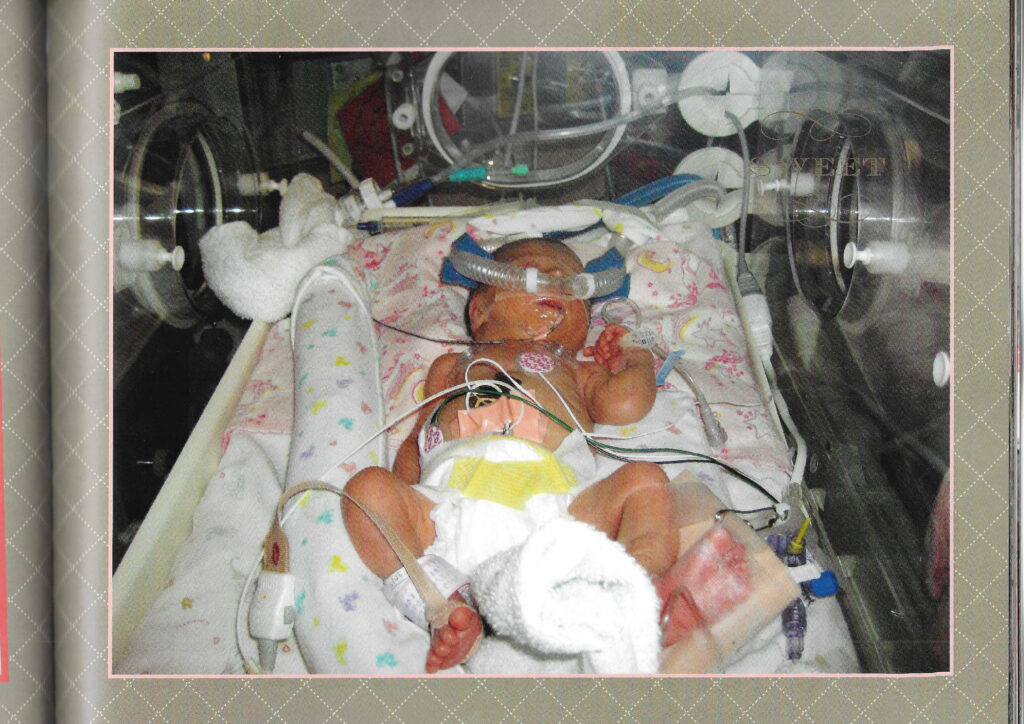
At just 30 weeks pregnant, her daughter Maia decided that, ready or not, she wanted to greet the world. Maia’s tiny body – just three pounds, one ounce – wasn’t ready, but the team at MCH was. From her very first hours, exceptional health care workers in the hospital’s neonatal intensive care unit (NICU) and advanced, donor-funded equipment sustained her. A CPAP machine supported her breathing, an incubator regulated her temperature and monitors continuously tracked her every vital sign.
When Maia’s condition suddenly worsened on day two, the team moved quickly: a chest tube relieved the pressure in her chest from a collapsed lung, surfactant therapy helped her lungs expand and a ventilator took over her breathing entirely. Each piece of equipment, each life-saving intervention, was there because of donor support.
In the days that followed, Maia’s care team responded to each new challenge as it arose. Jaundice was treated with phototherapy. A blood infection was managed with targeted antibiotics and multiple platelet transfusions. The care team also closely monitored her heart conditions, her brain to check for any bleeding, and her eyes to screen for retinopathy of prematurity. It was an emotional roller-coaster, but Cynthia and her family were never alone. She shared: “They were always keeping us informed, step-by-step, offering support and reassurance.”

MCH is one of Canada’s largest pediatric academic teaching hospitals and the regional hub for children’s care across south-central Ontario, serving more than 80,000 patients each year. Its neonatal intensive care unit (NICU) is the largest in Canada and provides life-saving care to the most fragile newborns. For Cynthia, that depth of expertise was everything. “I always felt that I was in the best place. I had a lot of confidence in the technology because it was a research hospital and that was important to me.”
At three weeks old, Maia was stable enough to transfer to her community hospital to grow and gain weight. For Cynthia and her family, leaving MCH was difficult. “That was a moment when our family had a lot of anxiety because we felt so comfortable with the level of care at McMaster [Children’s Hospital],” Cynthia says. “You just don’t think any other hospital is going to match it.”
However, Maia’s care at MCH didn’t end at discharge. While she was under the care of her local hospital, Maia was transported for visits to MCH’s specialized eye clinic, where she was monitored for eye disease that can affect premature infants, a reflection of the kind of coordinated, continuous care that only a regional centre can provide.
After eight weeks in hospital, Maia came home, small but strong, weighing five pounds, 12 ounces. Her relationship with MCH continued well beyond that day. For years afterward, the Growth and Development Clinic and the hospital’s ophthalmology clinic closely followed her progress. She met every milestone.
Today, Maia is 17-years old and thriving. She excels academically, leads in student council, enjoys dance – especially ballet and pointe, varsity volleyball, snowboarding, and works as a lifeguard and swim instructor. She is now setting her sights on university. That journey from a ventilator in the NICU to a teenager who fills every room she enters is proof of what extraordinary care – supported by extraordinary donors – makes possible.