Party for Pain is a fundraising evening supporting enhanced pain services at Hamilton Health Sciences, presented by the Michael G. DeGroote Pain Clinic. Join us November 6, 2025, 5–10 pm at Carmen’s Banquet Hall, 1520 Stone Church Rd E, Hamilton. Expect live entertainment, raffle prizes, a magician, a comedian, drinks, and more
When doctors at Hamilton General Hospital determined that a tumour caused the pain in Ligia’s arm and the lump on her neck, they immediately set to work. When they saw that the cancer was rapidly entwining itself around her spine, clavicle, ribs, and shoulder, they started moving mountains.
Ligia was rushed to start radiation therapy and then chemotherapy, aiming to shrink the tumour and buy time for a team of doctors from across Hamilton Health Sciences (HHS) to devise a surgical strategy. The complexity of Ligia’s case demanded a coordinated effort from McMaster University Medical Centre (MUMC), Juravinski Hospital and Cancer Centre (JHCC), and The General.
“We’re one of only two hospitals in the province that could perform this surgery,” says Dr. Coroneos, a plastic surgeon involved in Ligia’s surgery. “It reflects all the things we do so well…We’re glad we have a capable team to care for people when they need it.”
“As a regional hub for surgical services, we often take care of patients with complex and rare conditions,” adds Dr. Pahuta the surgical lead for Ligia’s case.
Facing long odds with determination
Her doctors were compassionate and capable, eager to answer her questions, ready to use every resource and determined to see her through this. They were also honest about the severity of her condition. The team of surgeons would be essentially taking her apart and putting her back together. The cancer had spread so aggressively that they would have to remove parts of her bones, muscles, tissue and even her lung. There was a very real chance that she would not survive the surgery. Amputating her arm at the shoulder was one of the best-case scenarios she could hope for.
While the health care teams planned, Ligia prepared herself physically, mentally and emotionally for what was to come. Her loved ones rallied to support her in every way they could, and Ligia drew strength from their care and her fierce resolve to see her daughter grow up.
A marathon operation
On November 24, 2021, a multidisciplinary team of surgeons, nurses and other health care professionals in The General’s Spine Surgery Clinic, led by Dr. Pahuta, worked meticulously for 32 hours to remove the cancer and rebuild the parts of Ligia it had stolen. They had to remove half her clavicle and two ribs, along with significant muscle and tissue from her throat and neck. They were able to keep her arm but had to remove all its nerves, leaving her without any sensation from the shoulder down.
Waking up from the surgery was disorienting, but as Ligia realized that she was still alive, not paralyzed, and had her right arm, she felt joyous.
“I was feeling grateful. I was feeling happy because I would be seeing my family again.”
Ligia’s recovery journey was arduous, involving extensive physiotherapy, wearing a halo to support her neck for two months and adapting to life with some physical limitations. Still, every day, she grounded herself with gratitude for her life, for time with her daughter, family and friends, and for everyone at HHS – from the surgeons to the cleaning staff to the donors – who helped save her life.
The complex, interdisciplinary care Ligia received at HHS is only possible through the generosity of donors. Your contributions enable the hospital to push the boundaries of medical science and provide life-saving treatments to patients like Ligia. Donate now.
Join Hamilton Health Sciences Foundation for Illuminight on October 9, 2025, at Dyment’s Farm in Dundas. This uplifting, family-friendly evening unites our community to shine a light on cancer care and research. Lantern-lit pathways, children’s laughter, and shared moments fuel hope for those facing cancer at Juravinski Hospital and Cancer Centre. Every step and smile helps advance life-changing care.
From before she was even born, Claire’s journey with McMaster Children’s Hospital (MCH) began. Now, at 18 years old, she is preparing for adulthood—something that once seemed uncertain. Throughout her life, one thing has remained constant: the expert, compassionate care she has received at McMaster Children’s Hospital, particularly from the hospital’s cardiology team.
Leanne, Claire’s mom, first came to McMaster Children’s Hospital when she was pregnant. Her obstetrician in Guelph referred her to prenatal care at McMaster Children’s Hospital. Claire was growth-restricted, and they identified some abnormalities on ultrasound. It was a terrifying time, filled with uncertainty. But at McMaster Children’s Hospital, they found not only answers but also reassurance.
From the beginning, the hospital’s cardiology team was at the center of Claire’s care. “We saw Dr. Mondal before she was born,” Leanne shares. “He always jokes that he’s known Claire the longest because he saw her on a fetal echocardiogram.” That early connection set the stage for a lifelong relationship with the cardiology team at McMaster Children’s Hospital.
Claire was born with mosaic trisomy 22, a rare genetic condition that affected multiple areas of her health, including her heart. She spent two months in the hospital after birth, undergoing countless tests and assessments. She was diagnosed with an atrial septal defect (ASD) and pulmonary stenosis, conditions that would require multiple surgeries as well as lifelong monitoring and intervention.
“Ever since I was little I would get excited to go to McMaster,” says Claire. “I was really seen as a person. They took time to answer me.”
“Every single step of the way has been amazing right from the very first appointment,” Leanne says. “They were so kind and took their time to answer all of our questions and reassure us as best as they could.”
“Ever since I was little, I would get excited to go to McMaster,” says Claire. “I was really seen as a person. They took time to answer me. They prepared me and gave me the tools to understand so I could one day manage my health as an adult.”
Over the years, cardiology remained a constant thread in Claire’s life. Dr. Mondal performed two heart procedures, and all of her monitoring, follow-up care, and treatment planning happened at McMaster Children’s Hospital. Claire had annual or biannual visits to cardiology where she underwent ECGs, stress tests, pulmonary tests and even sleep studies related to her heart.
For Claire, having access to such comprehensive care in one place made all the difference. Her condition affected multiple systems in her body. Her care was complex. She also received care from ENT specialists, endocrinologists, neurosurgeons and developmental teams. Because of her heart condition, even things like getting her wisdom teeth out had to happen at McMaster Children’s Hospital, where they could manage any complications.
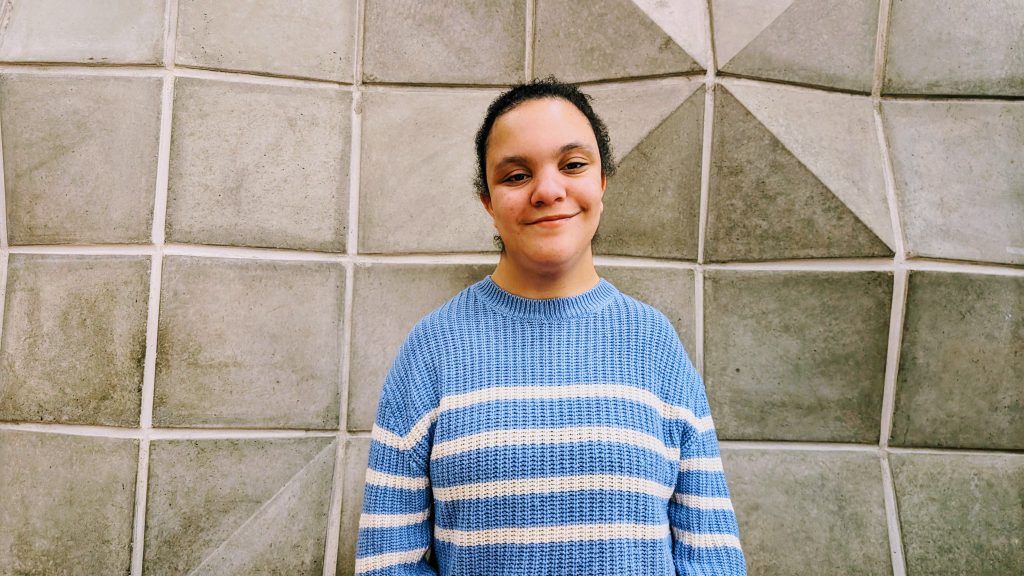
“We’ve had countless appointments, countless encounters and hospital stays over the years,” says Leanne. “And I can’t think of one negative thing in all of those times. Never once did we feel rushed or that we didn’t get the attention she needed.”
Despite the challenges, Claire has thrived. “She was very much at risk for developmental delays, but because of the care she got early she’s able to do all activities that other kids could do right through till now.”
Today, Claire is attending college to become a social services worker. “I love working with kids and youth who have disabilities,” she says. “I just hope to inspire kids that have health conditions that going through what you’re going through is just a small part of you, not your whole identity. It does get better and that you can make the world a better place.”
She’s also transitioning into the adult health care system, something that both she and her mom find daunting. “I don’t like it,” Leanne admits. “Neither of us do. We’ve known these people her whole life.” Fortunately, Leanne has also described the transition as “seamless” with Dr. Mondal is making sure nothing falls through the cracks.
As Claire moves forward, one thing is clear: the care she received at McMaster Children’s Hospital has given her a future full of possibilities. From fetal diagnosis to adolescence and now adulthood, McMaster Children’s Hospital has been there every step of the way, ensuring Claire’s heart—and her future—remain strong.
“I’ve said many times that if we hadn’t needed McMaster, we wouldn’t have known how valuable they were. We could never pay it back in, a million years, and I think every donation to go towards the care for the kids like Claire is worth it. They all deserve that level of care and that support is so important.”
Hamilton Health Sciences (HHS) is expanding medical interpretation services for its patients and families thanks to a $900,000 commitment from the RBC Foundation. Medical interpretation platforms using on-demand video and audio services are currently being used to support patients and families in all in patient, emergency and diagnostic areas within the hospital. This donation will make it possible to expand this technology to over 300 ambulatory (outpatient and clinic) services across all sites, as well.
“This medical interpretation technology will help ensure that everyone involved can ask questions, resolve confusion, and have a clear understanding of the patient’s needs and plan of care,” says Maria Artuso, VP Commercial Services, Greater Hamilton, RBC.
“Recognizing that approximately 27 percent of Hamilton residents have a first language other than English, this service is key to help provide inclusive health care for patients.”
As one of Ontario’s largest and most comprehensive health-care organizations, Hamilton Health Sciences recognizes the importance of equity, diversity and inclusion in delivering exceptional care to our diverse community of 3 million people. When it comes to interpretive services, Hamilton Health Sciences previously relied on in-person interpreters or phone services, however, these were time-consuming and often unavailable in a timely manner. This medical interpretation solution provides on-demand video and audio interpretation at the bedside – in less than 20 seconds on average – and in 240 languages, including American Sign Language.
People are at their most vulnerable state when trying to access health services, and the inability to speak in their native tongue to clinicians is an incredibly challenging barrier,” says Anissa Hilborn, CEO of the Hamilton Health Sciences Foundation.
“So, we’re extremely thankful to the RBC Foundation for this donation that will help us overcome this barrier and create a more seamless experience when accessing health care in our community.”
Media inquiries can be directed to:
- Wendy Stewart
- Hamilton Health Sciences
- stewartwen@hhsc.ca
In 2018, Karen Choong, a critical care doctor at McMaster Children’s Hospital and professor in the Department of Pediatrics, received $25,000 to improve recovery after intensive care treatment.
The result was PICU Liber8: Eight Steps Toward Better Pediatric Recovery. This innovative rehabilitation program focuses on patient comfort, sedation stewardship, early mobilization, sleep hygiene, optimal nutrition and family engagement. Its goal is to “liberate” children from common complications of critical illness and support a smoother, more holistic recovery.
What happens when doctors ask about more than just symptoms?
In 2022, Gita Wahi, a general pediatrician at McMaster Children’s Hospital and associate professor in the Department of Pediatrics, received $25,000 to explore how social challenges affect child health.
Her study introduced a new screening tool to help doctors identify unmet social needs among patients and their families. Findings led to the creation of a food pantry and grocery gift card program at McMaster Children’s Hospital to support families experiencing food insecurity. This work was published in the Journal of Paediatrics & Child Health and continues to inform care practices today.
Can we spot the warning signs of high blood pressure earlier?
In 2024, pediatric nephrologist and associate professor Rahul Chanchlani received $25,000 to support his ALERT-BP study, focused on identifying early signs of high blood pressure in children.
His research aims to improve screening and long-term outcomes by highlighting the links between childhood hypertension and future risk of heart and kidney disease. Published in JAMA Pediatrics, the study showed that youth with high blood pressure face significantly higher long-term risks of serious heart conditions, including stroke and heart attack.
Other research questions we are asking:
In 2021, Mark Tarnopolsky, holder of the McMaster Children’s Hospital Research Chair in neuromuscular disorders, was awarded $65,000 to investigate how exercise can improve outcomes in more than 150 different neuromuscular conditions.
In 2022, a significant donation to McMaster Children’s Hospital helped launch one of the world’s first pediatric fecal microbiota transplant pilot programs, offering life-saving treatment to children with C. difficile infections.
In 2024, pediatric gastroenterologist Jenna Dowhaniuk received $25,000 to support her research on how to improve care for children living with celiac disease.
“Behind every breakthrough is a donor who believed in the power of research,” said Anissa Hilborn, CEO of Hamilton Health Sciences Foundation.
“Thanks to our community of supporters, children in our community, region and beyond can benefit from research that is delivering better care, comfort and outcomes.”
The Juravinski Research Institute (JRI) is supporting a groundbreaking project by Hamilton Health Sciences, McMaster University and St. Joseph’s Healthcare Hamilton that could transform cancer treatment in Hamilton and serve as a model for cancer care across Canada.
The initiative—called Enhancing Liquid Biopsy Evaluation and Data Analytics for Personalized Medicine or ELEVATe-PM—will develop better ways to detect and track cancer using simple blood tests. These tests, known as liquid biopsies, can identify minimal residual disease—tiny amounts of cancer that may remain after treatment—and help doctors tailor care to each patient’s needs.
Led by Aly-Khan Lalani, MD, Tobias Berg, MD and Darryl Leong, MBBS, PhD, the research team brings together clinicians, scientists and digital health experts from Hamilton Health Sciences, McMaster University and St. Joseph’s Healthcare Hamilton. Patient representatives are also part of the team, ensuring the work reflects real-world needs and experiences.
“We’re excited about what this means for cancer patients,” said Lehana Thabane, chair of the JRI scientific committee and vice-president of research at St. Joseph’s Healthcare Hamilton.
“This project combines cutting-edge diagnostics with artificial intelligence to support more personalized, effective care. It’s about delivering the right treatment to the right patient at the right time.”
The program will initially include select patients diagnosed with bladder cancer, kidney cancer, and acute myeloid leukemia at Hamilton Health Sciences’ Juravinski Cancer Centre. It will build streamlined systems to collect and analyze specific biomarkers in blood—such as circulating tumour DNA or cancer-related proteins (such as KIM-1)—making it easier for clinicians to monitor disease and make treatment decisions.
ELEVATe-PM will also harness electronic health records and advanced data analytics to identify patients who could benefit from the tests. The team aims to integrate results directly into care plans, helping oncologists act quickly and accurately.
With the potential to expand to other cancer types, the project positions Hamilton as a leader in personalized cancer care and health data innovation.
“We are grateful to the JRI for funding our work,” said Lalani, a medical oncologist and the nominated lead principal investigator. “Together with our collaborative, city-wide team, we aim to integrate innovative blood testing into routine clinical workflows to benefit patients in Hamilton. We will also harness the power of AI and data analytics to evaluate and enhance efficiencies within our cancer research program. Throughout this project, we will actively seek international best practices from leading researchers in these fields.”
The JRI is improving the health of Canadians by advancing groundbreaking research at Hamilton Health Sciences, McMaster University and St. Joseph’s Healthcare Hamilton. The Institute and its projects are funded through the generosity of the late Hamilton philanthropists, Charles and Margaret Juravinski, and the Juravinski Foundation. Join Charles and Margaret’s lasting legacy in pioneering health research by making a gift in support of the JRI.