Join us on Saturday, June 6 at Mona Campbell Track for a morning of fun, laughter, and unforgettable memories. Help write the next chapter for children and youth at McMaster Children’s Hospital and Ron Joyce Children’s Health Centre.
To request a physical copy of our Annual Donor Report, call us at 905-522-3863 or email info@hamiltonhealth.ca
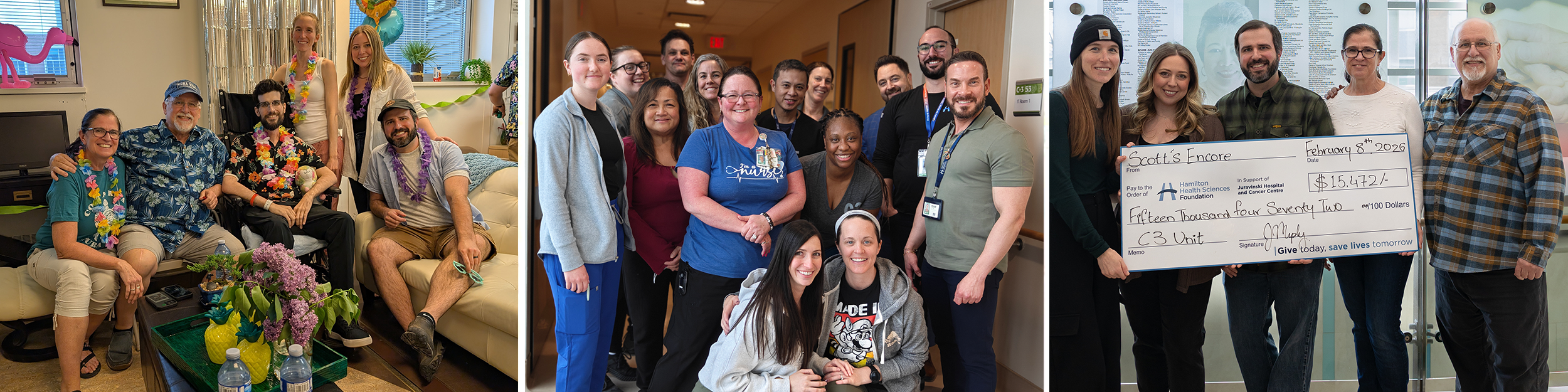
Scott Marsh played six instruments. He made strangers feel like lifelong friends. He was “physically incapable” of being mean to others according to his dad and brother. He listened. He cracked jokes through chemotherapy and walked his dog between gasping breaths because, as his partner Jessica Murphy put it, “that’s just who he is.”
When Scott was diagnosed with stage 3 esophageal cancer in early 2024, his journey brought him repeatedly to C3, the inpatient oncology unit at Juravinski Hospital and Cancer Centre. What his family found there helped shape both his final months and the way they would choose to celebrate his life.
Oncology Nursing Day honours the irreplaceable contributions of oncology nurses across Canada. This year’s theme, focused on collaboration and innovation, speaks directly to what Scott’s family experienced on C3: a team that pulled together across disciplines, across shifts, and across the invisible line between clinical duty and human connection.
As with many oncology patients, Scott’s condition was complex and required highly specialized care. When his circumstances placed him in the emergency department, the family knew immediately where he needed to be. “Please get us a room in C3,” Jessica Murphy would say. “He has very specific care and if you could just get us to C3 I know everything will be fine.”
That trust was earned visit by visit. Nurses brought fold-out beds when family stayed overnight. They took Scott’s wish to live as ‘normal’ a life as possible to heart, letting the family transform Scott’s room into something that felt like home, with photographs on the walls, lamps, a Nintendo Switch, and home movies. “The nurses have such a great family-centered approach to care,” says Jessica Marsh, Scott’s sister-in-law. “They really empowered Scott and empowered us.”

L to R: Scott and his family at his 35th birthday, members of the C3 nursing team, Scott’s family presenting the funds raised by SkiddleyFest
“It was painfully obvious that these people were doing the absolute best they can, sometimes under difficult situations, to make Scott’s time as good as possible and give him the best chance,” says Scott’s father, Rob. “We always felt that everybody was trying to go the extra mile for him.”
Even when Scott’s prognosis changed for the worse, he was unwavering in his determination to seize every day, to find joy where he could, and fight for time and quality of life. “Our only job was to try and facilitate that,” says Scott’s brother, Tom. “And C3 understood the assignment.”
When Scott turned 35 on May 17th of last year, the family wanted to give him a birthday party. Social workers found a room. The nurses worked out a medication schedule that would let Scott attend. His day nurse travelled back and forth from C3 to the birthday room to administer his pain medication so he would not have to leave. Sixty people showed up to celebrate Scott. Family, friends and fellow musicians gathered, chatted, sang, played guitar and celebrated. Scott called it the best party he had ever had.
Sadly, Scott passed away in early July 2025. In the months that followed, his friends and family channeled their grief into action. “Scott brought people so much happiness and joy and generosity,” says his mother, Gay. Carrying that generosity forward felt like the right way to honour him.
Scott was a fixture in Hamilton’s music scene, and so naturally, the tribute took the form of a music festival. SkiddleyFest came together in just seven weeks, drawing hundreds of people, each with a personal connection to Scott. This gathering was a chance for his friends to share their love, their music and their loss. Together, they raised more than $15,000 to support the highest priority needs on the C3 unit, helping empower that beloved team to continue delivering exceptional care. Plans for a second SkiddleyFest are already underway.
Journeys like Scott’s are carried by oncology nurses whose specialized knowledge and training, clinical judgment, skill and compassion guide patients and families through the most complex and vulnerable stages of care. They are dedicated to addressing each patient’s oncological needs while caring for the whole person, not just the disease. On Oncology Nursing Day, we recognize these nurses for the care they deliver, and for the humanity they bring to it by helping patients like Scott live fully, even in the hardest moments.
The Prosthetics and Orthotics department at Hamilton Health Sciences (HHS), the largest of its kind in Canada with over 10,000 patient visits annually, is setting a new standard in patient care. HHS has become the first public health care facility in Canada to adopt advanced 3D printing technology for prosthetics and orthotics on such a broad and comprehensive scale.
A generous gift of $1 million from Hamilton and District Senior Citizens’ Home RAMBYNAS Inc. enabled the purchase of a 3D printer system that allowed the clinical teams at HHS to dream bigger. Their willingness to invest boldly in something new is already paying off — providing access to cutting-edge prosthetic and orthotic care for both pediatric and adult patients that can now benefit from its availability in the region.
The system includes two printers: one large unit fabricating more rigid material, and a smaller one providing softer, more flexible elements. Together, they allow for unprecedented customization – as demonstrated by a child’s orthotic featuring a hard outer shell with a Batman motif and a soft inner lining that sits against the skin. This technology adds complexity without adding cost, time, or labour, reduces waste, and expands patient choice in how devices are fabricated, their comfort and what they look like.
Says Brad Haardeng, Clinical Manager of Prosthetics & Orthotics, “People tend to get pretty excited about new technology.” This new 3D printer system is enabling the clinical team to pioneer on multiple fronts: finding novel opportunities to collaborate across hospital departments and exploring unexpected uses, including burn masks for HHS’s burn unit. It also positions HHS to attract and retain the brightest minds in the field. “It’s incredible to see how this technology is changing lives,” adds Danielle Petruccelli, Geriatrics and Rehabilitation Program Director. “Thanks to the generosity of our community, we’re able to offer patients care that’s not just innovative but truly life changing.”
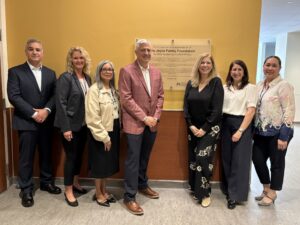
Hamilton and District Senior Citizens’ Home RAMBYNAS Inc. were recently hosted to see the facility and their donation hard at work. “We are so impressed and so happy we could make this donation,” said Gedas “Butch” Blekaitis, a board member of Hamilton and District Senior Citizens’ Home RAMBYNAS Inc. “It was so exciting and interesting to tour the facility here at HHS and see the impact that the innovative 3D printing is making on patients’ lives,” added Loretta Stankus, another board member.
Leslie Gillies, VP Post-Acute Care, Clinical Practice & Education and Chief Nursing Executive, captured the spirit of the day: “To see everyone focused on this goal of improving people’s lives is just amazing. We are so grateful for Hamilton and District Citizens’ Home RAMBYNAS Inc.’s generosity and their vision in investing in this technology.”
Hamilton and District Senior Citizens’ Home RAMBYNAS Inc. also funded a robotic exoskeleton and Zero-G gait and Balance system for the Regional Rehabilitation Centre at Hamilton General Hospital, as well as a donation to benefit priority equipment at St. Peter’s Hospital.
These investments reflect what becomes possible when community generosity and medical innovation meet. We are deeply grateful to Hamilton and District Senior Citizens’ Home RAMBYNAS Inc. for their community leadership and compassion in support of groundbreaking innovation to benefit the patients, families, and caregivers of HHS.
When Kate was just three weeks old, a routine checkup with her family doctor revealed that she wasn’t gaining weight. The doctor acted quickly, sending Kate to McMaster Children’s Hospital where she was diagnosed with adrenal insufficiency. That referral saved her life.
Kate was diagnosed with adrenal insufficiency – a condition that prevents the body from producing enough cortisol to respond to physical stress. Without treatment, even a cold or stomach flu could trigger life-threatening complications. The care team began the complex work of stabilizing Kate’s health and building a medication plan that would help her body do what it couldn’t on its own.
“When we got sent home, I felt like they prepared me as much as they could,” says Kate’s mother, Melanie.
The team trained Kate’s parents to give medication to a newborn four times a day and use an emergency injection if needed. They also offered 24/7 access to a pediatric endocrinologist, providing expert guidance and reassurance whenever it was needed.
Kate’s early years involved dozens of visits to the hospital, including multiple emergencies. “That was really scary,” says Melanie. “But once we got there, the hospital staff were very helpful. They took us very seriously.”
The emergency team was always prepared when Kate arrived. In addition to urgent care, her condition required ongoing monitoring, blood work and appointments with a range of specialists. Her care included endocrinology, genetic testing and child life support. Having all the expertise in one place made a complex condition more manageable.
Kate quickly built relationships with the team. She grew so comfortable that, by the time she was a toddler, she would walk into the lab, say hello to the technicians, and extend her arm for blood work without fuss. As she grew, child life specialists helped her build confidence in managing her care—teaching her how to speak up about her needs and make sure others knew how to support her.
Today, Kate visits the hospital three times a year for routine care. Her daily life still includes medication, and her family remains cautious around illness. While a mild cold once meant a hospital stay, they can now often manage minor illnesses at home.
McMaster Children’s Hospital continues to grow with Kate. When her longtime doctor moved to a different hospital, her new physician ran updated tests, reviewed her history, and ensured a smooth transition. “We felt instantly at ease,” says Melanie. “She was extraordinarily knowledgeable.”
Now a bright and energetic teenager, Kate enjoys horseback riding, soccer, piano and time with her friends. She keeps busy with school, sports, and a part-time job at a local café. “She’s this perfect combination of kindness and responsibility and vibrancy,” says Melanie.
Behind Kate’s story is a network of donor support. From specialized equipment and child life programming to expert training, donations help ensure families like Kate’s have access to every resource they need.
“It’s a pretty amazing person who donates,” says Kate. “The impact is immeasurable,” Melanie agrees. “I hope everybody does this because we’ve experienced the massive benefits McMaster Children’s Hospital has provided. I hope everybody supports it because it truly changes lives.”
A generous gift from a long-time donor is bringing more world-class cancer detection and treatment technology to south-central Ontario, giving patients and their families new hope.
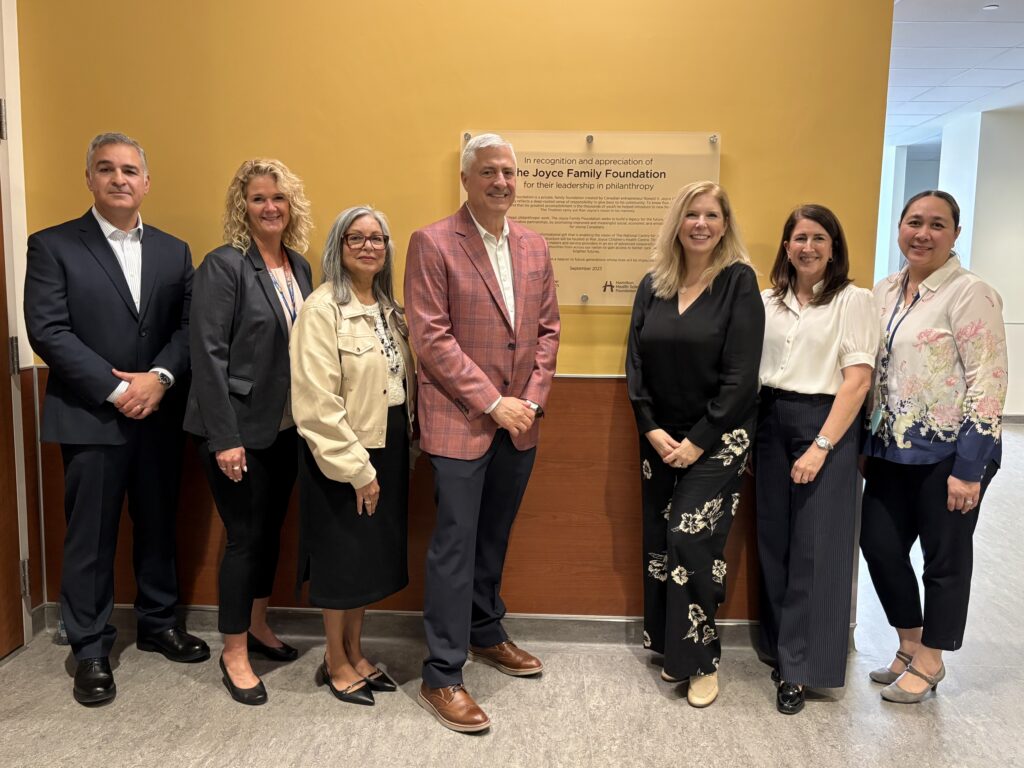
The Ron and Nancy Clark Foundation’s $1,395,000 gift will benefit two priority initiatives: a new Positron Emission Tomography/Computed Tomography (PET/CT) scanner, and magnetic seed therapy equipment at Juravinski Hospital and Cancer Centre (JHCC).
For over 60 years, the Caledonia-based foundation has advanced health care in south-central Ontario — supporting Hamilton Health Sciences since 2012 with more than $8.6 million enabling many priority projects including the build of the Ron and Nancy Clark Stem Cell Transplantation and Cellular Therapies Unit at JHCC. Supporting Hamilton Health Sciences has been extremely important to the Foundation, as cancer patients from the Caledonia/Haldimand community are commonly referred to Juravinski Hospital and Cancer Centre for care.
“The Foundation believes that giving back to health care is one of the most meaningful ways to support our community. For over a decade, we have been thrilled to see the impact of our partnership with Hamilton Health Sciences, demonstrating time and time again what can be achieved when we work together to build a brighter future for patients and their families.”
– The Ron and Nancy Clark Foundation
Accelerating Answers with PET/CT
Early and accurate diagnosis is critical for effective cancer treatment. Thanks to this gift, health care teams at JHCC will have access to one of the most powerful tools in modern cancer care: the PET/CT scanner. This advanced imaging system provides a detailed, real-time view of cancer activity in the body. It allows oncologists to locate tumors with greater precision, and gather the exact information needed to create personalized treatment plans. For patients, this means a faster path to the right treatment and better outcomes.
“The PET/CT scanner is transformative in how we diagnose and monitor cancer. It allows us to see not just where cancer is, but how it’s behaving. This will enable our clinicians to make faster, more accurate decisions and deliver the most effective, individualized care possible.”
– Dr. Chris Hillis, Chief of Oncology, Juravinski Hospital and Cancer Centre
Making Breast Surgery Safer and More Precise
The Ron and Nancy Clark Foundation’s contribution is also advancing care for patients managing a breast cancer diagnosis. The introduction of magnetic seed therapy is making breast cancer surgery safer, more comfortable, and more efficient. This innovative technique replaces the need for older, radioactive methods of tumor localization. Surgeons can now insert a tiny, non-radioactive magnetic seed to mark a tumor’s location. Using a handheld probe, they can guide the procedure with extreme accuracy, ensuring the complete removal of cancerous tissue while preserving as much healthy tissue as possible. This technology reduces the number of procedures a patient may need and improves their overall experience.
“The support of strong partners like the Ron and Nancy Clark Foundation is so important to bringing to life the innovative treatments and therapies that make meaningful change in the lives of patients.”
– Anissa Hilborn, CEO, Hamilton Health Sciences Foundation
A Legacy of Transformative Giving
The ongoing generosity of the Ron and Nancy Clark Foundation brings more than just leading-edge equipment and resources to JHCC. It brings hope to patients and peace of mind to their families. Their visionary support ensures clinical specialist teams have the cutting-edge tools they need to provide the best possible care. This enduring partnership is a powerful example of how community-focused philanthropy directly improves and saves lives.
Life with Parahemophilia
Every week, 12-year-old Karina arrives at McMaster Children’s Hospital for her treatment. She rolls up her sleeve, chooses which arm to use and which band aid she’ll want, and confidently engages with her care team. She’s been doing this for nearly her entire life.
Karina was just days old when her parents learned she had Parahemophilia, also known as a factor V deficiency, a rare and severe bleeding disorder. After a routine heel prick wouldn’t stop bleeding, her local hospital in Niagara quickly referred her to McMaster Children’s Hospital, where specialized testing confirmed the diagnosis.
A Second Home at McMaster Children’s Hospital
McMaster Children’s Hospital became a second home to Karina and her family. It offered expert care and a place where they could learn and feel supported. “It’s a safe place,” says Karina. “It’s like they’re part of my family.”
McMaster Children’s Hospital is a regional hub for complex pediatric care, meaning families like Karina’s can access the expertise they need all in one place. For children with rare conditions, that proximity can be life-changing.
Parahemophilia affects the blood’s ability to clot, which means that even minor injuries can cause prolonged or spontaneous internal bleeding. Because of her condition, even minor bumps or falls can lead to serious internal bleeds, especially in her joints.
Karina’s treatment includes weekly plasma infusions to replace what her body cannot produce on its own. These hospital visits are essential: there is no take-home version of her medicine.
The hospital’s team of hematologists, nurses, and physiotherapists worked closely with the family, ensuring they never had to navigate it all alone. Her mom, Loretta, learned how to monitor for dangerous bleeds, measure swelling, and stay calm in emergency situations. As Karina matured, they helped her understand her own medical needs in ways she could grasp, empowering her to become her own advocate.
“She’s a tough cookie for all the things that she has to go through,” says Loretta. “She does it with lots of resilience and strength, so I’m very proud of how strong she is and how far she’s come.”
Growing Up with Confidence and Support
Now in Grade seven, Karina educates classmates about her condition and confidently explains her treatments to new friends. She’s even brought them along to the hospital to show them what a day in her life looks like.
For Loretta, the difference McMaster Children’s Hospital has made in their lives is clear. She knows that without the generosity of donors, the expert care her daughter relies on might not be so close to home.
“Donations are the reason why kids like Karina can get the support that they need. We have the care closer to home because of those donations. We don’t have to go all the way to Toronto,” says Loretta. “The more money you have to give the hospital, the more they can give back to their patients.”
Chloe is a bright light.
“Anytime you walk into a room, she’s smiling,” says her father, Conrad. “She always tries to spread happiness to everyone.” With her love for volleyball, arts and crafts, dolls, dancing and singing, Chloe radiates joy.
At just four years old, Chloe began showing symptoms that worried her family. “She was wetting herself at recess,” recalls Conrad. In the diabetes research field himself, Chloe’s father had a gut feeling something wasn’t right. A quick test at home on Halloween confirmed it: Chloe’s glucose levels were dangerously high.
They first went to a local hospital, but Conrad left feeling anxious and uninformed. He called a colleague, who urged him to head to a teaching hospital instead. When they arrived at McMaster Children’s Hospital, everything changed.
“The care I received as soon as I got there… wow,” he says. “A nurse and a child life worker met us right at the ER and let us know what’s going on and that everything was going to be OK.”
Dr. Bassilious formally diagnosed Chloe with type 1 diabetes and immediately offered reassurance. “She’s going grow up to be a healthy woman. She’s going have a great quality of life. Don’t worry, everything will be OK,” she told Conrad, her tone, her compassion, instantly putting him at ease.
McMaster Children’s Hospital is one of Canada’s largest pediatric teaching hospitals and serves more than 77,000 patients each year. As a regional hub for children’s care, it provides highly specialized services that make a life-changing difference for families like Chloe’s.
For Chloe, the team’s approach was empowering from the start. “They actually allow Chloe to be part of the care decisions,” says Conrad. “It’s a conversation with me in adult language and then it’s relayed into her language level so she can understand everything.” Appointments begin with questions about Chloe’s wellbeing, before shifting into medical details. “It helps build her self-esteem, gauges her mental well-being and her owning what she has.”
Today, Chloe visits the Child and Youth Clinic every four months for monitoring and support. With every decision, her holistic wellbeing is the focus. For example, Chloe was recommended two wearable medical devices – a continuous glucose monitor (CGM) and an insulin pump – that work together to manage her condition. “It gives us peace of mind,” says Conrad. These devices reduce the number of injections she needs from eight needles daily to just one every three days.
Child Life specialists have been there every step of the way, helping Chloe and her family prepare for future transitions like puberty. They’ve offered guidance on body image and medical devices, helping Chloe feel confident and supported as she navigates this stage of growing up. Additionally, Chloe’s older sister Kaitlyn was offered sessions to help her cope with her sister’s diagnosis and the ever-changing dynamics at home. This quickly became a ‘household’ chronic disease.
Inspired by this support, Chloe has become a passionate advocate. She’s walked the runway in a Diabetes Canada fashion show called Pump Couture, proudly displaying her devices. She’s also offered peer support to other children starting on a CGM.
Conrad credits Chloe’s health and confidence to the comprehensive and child-centered care she has received at McMaster Children’s Hospital. To ensure patients with complex chronic conditions get optimal care, they should go to places like McMaster Children’s Hospital. Taking the time to diagnose, talk, treat and build a relationship is paramount,” says Conrad. “Bundled care makes a world of difference. Anyone who asks me I tell them go to McMaster Children’s Hospital.”
This level of care is only possible thanks to donor support. From emergency care to ongoing clinic visits, donor generosity helps fund essential programs like Child Life, advanced monitoring technologies, and the kind of wraparound care that sees the whole child.
“Even the little arts and craft table helped her take the weight and the burden off what was going on,” says Conrad. “It just allowed her to be a kid.” Whether it’s paint supplies, medical devices, or a reassuring voice, donor generosity helps ensure that children like Chloe receive the exceptional care they deserve today, and for years to come.