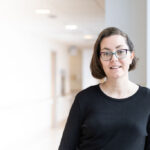


Heather leads a full life centered on volunteer work, creative hobbies and, above all else, her three young children. In June 2025, a massive heart attack triggered by spontaneous coronary artery dissection placed her in critical condition and put her ability to return home to them in doubt. She was only 42. She still feels the weight of those days when she recalls how, twice that summer, her children had to be told “that they might no longer have a mummy.”
On June 2, Heather collapsed at home after telling her husband she felt a weight on her chest. Within minutes, her husband had called 911. Their friend and neighbor, Dustin, who is a firefighter trained in CPR also rushed over to help. Emergency responders filled the house and stabilized her before transporting her to the nearest hospital. There, teams worked quickly to prepare her for transfer to Hamilton General Hospital, a regional centre equipped for the most critical cardiac cases.
At the General’s emergency department, specialists stood ready. Heather’s condition remained unstable. Her mother, Betty, recalls, “When she arrived it was touch and go.” The clinical teams assessed her immediately and determined she needed advanced life support beyond what most hospitals can provide. Physicians placed her on an ECMO machine, a donor-funded technology that temporarily takes over the work of the heart and lungs. “The ECMO machine made the difference,” says Heather. She was ultimately put on the machine twice, a rare intervention, during her time at the General. “I technically died twice. But because of the amazing tools they had here, they were able to bring me back and keep me going.”
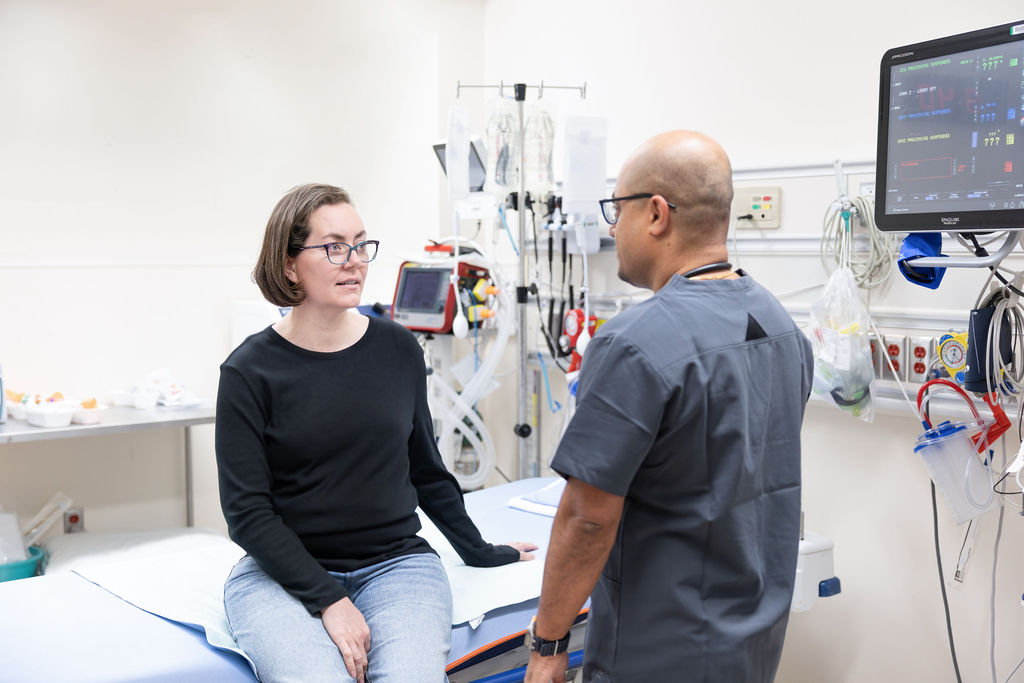
She spent eight weeks in intensive care and nearly five months in hospital overall. Betty remembers the early outlook. “They told us the second day that she had an hour or two to live. But, here she is.” Surgeons, cardiologists, nurses, and rehabilitation specialists coordinated every stage of treatment, from emergency stabilization to open-heart surgery to neurological recovery.
Even during critical care, compassion shaped Heather’s experience. She later learned that an Intensive Care Unit (ICU) nurse held her hand for half an hour because she had asked for comfort. “They came to your side and they did whatever was needed.”
After ICU, Heather entered rehabilitation, where physiotherapists, occupational therapists, and speech therapists helped her rebuild mobility, daily living skills and speech.
Heather speaks with deep appreciation for the team who cared for her, including her surgeon, Dr. Whitlock, her lead physician, Dr. Ainsworth, and the many nurses and therapists who guided her recovery. “If there was anything that I needed, they were there,” she says. “I don’t remember a lot about my time in the ICU but my family loved that team.”
Heather’s sister, Laura, confirms: “The team who cared for Heather in the ICU provided truly exceptional support to Heather and our entire family. Every question we asked was met with patience, clarity, and genuine compassion. They cared for Heather with both knowledge and heart, recognizing the emotional weight of our situation and responding with empathy at every step. We are deeply grateful for the extraordinary professionalism, kindness, and humanity they showed throughout her care.”
Throughout her stay, donor support shaped what was possible. Advanced equipment such as ECMO, specialized cardiac surgical tools, and rehabilitation resources give care teams the ability to respond instantly when seconds matter. Regional hospitals like the General rely on philanthropy to maintain these capabilities and to serve patients from across Ontario who need highly specialized treatment.
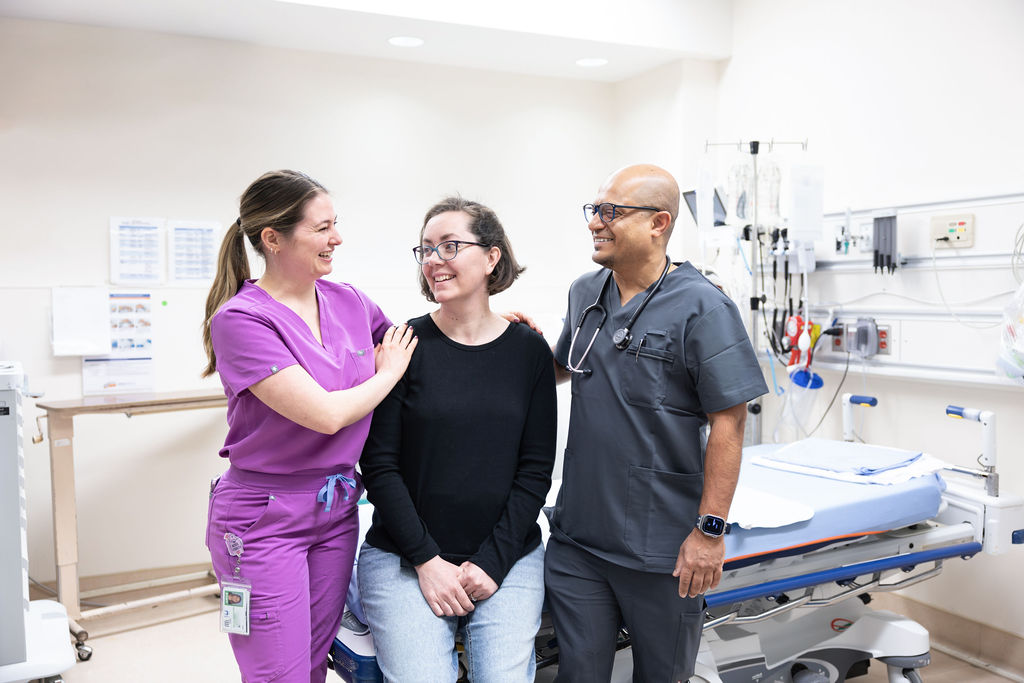
Today Heather continues to regain strength and independence. She credits her survival to skilled clinicians, advanced technology, and her own determination to return to her children. She shares a message for anyone considering support for hospital care: “Donate. Help people like me. It does work. Make sure the hospitals have the equipment that they need so they can do their good work.”