


It started with a shower in a marina during a boat trip along the Trent Canal. Two weeks later, Cynthia, a retired seniors’ care professional, was barely conscious and breathing with great difficulty. Recognizing that something was seriously wrong, her husband Ray brought her to Hamilton General Hospital’s (HGH) emergency department. The team there responded immediately. “Is she always this confused?” the triage nurse asked Ray. When he said no, she acted without hesitation, securing a wheelchair and bringing Cynthia straight into the emergency room.
Within days, Cynthia was diagnosed with Legionnaires’ disease, a type of severe lung infection, and placed in a medically induced coma. What followed was a four-and-a-half month stay in the Intensive Care Unit (ICU) that tested the full depth of HGH’s specialized expertise. The team managed two medically induced comas, treated sepsis, navigated feeding tubes and tracheotomy tubes, and addressed a severe secondary lung infection that complicated her recovery at every turn. At one point, Ray was asked to prepare to make a very difficult decision about her care. “The doctors that we have seen afterward have all said they never expected Cynthia to come out of that alive,” Ray recalls.
She did.
HGH serves as a regional referral centre for critically ill and injured patients across south-central Ontario, offering advanced treatments and specialized expertise that many smaller centres cannot provide. As one of Canada’s largest academic teaching hospitals, it draws exceptional medical professionals and trains the next generation of health care leaders. For Cynthia, that depth of skill and commitment was present at every stage of her care.
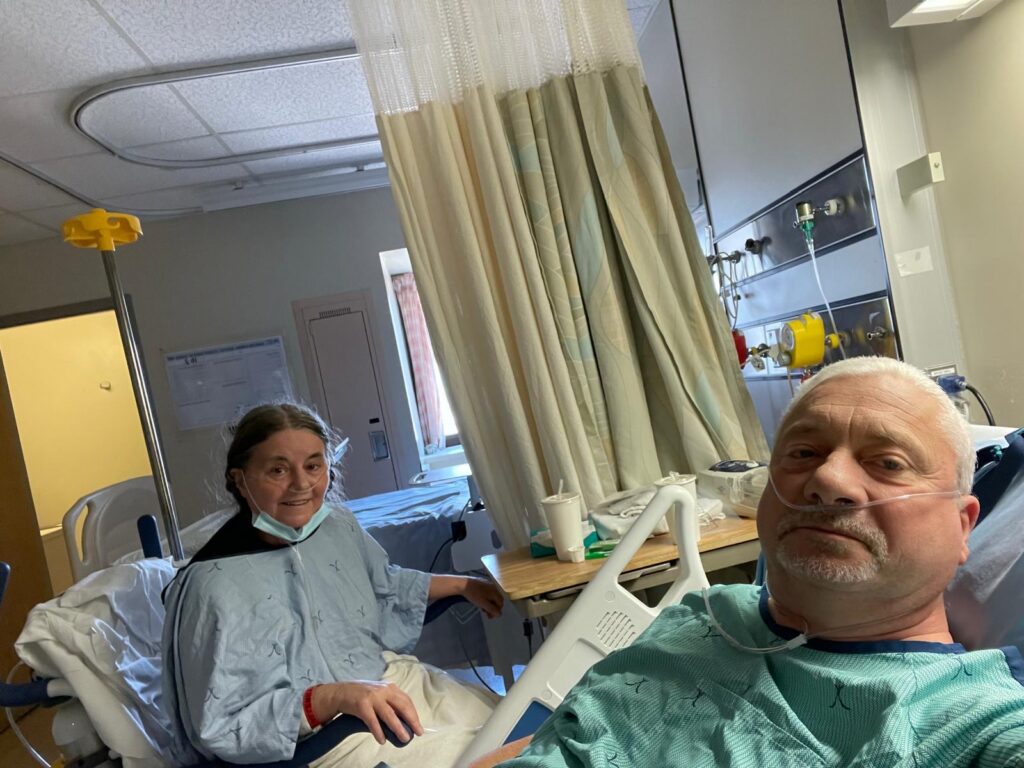
That standard of care continued through rehabilitative support while she was still in hospital, from the ICU through to a step down unit and finally ward care. Physiotherapists like Elise helped Cynthia progress from her first assisted steps to walking the eighth-floor hallways daily, cheered on by staff from every department she passed. “I had a cheerleading crowd like I was in the world series,” she recalls. Respiratory therapists visited multiple times daily, occupational therapists helped rebuild her manual dexterity, and even a member of the cleaning staff taped a handwritten note to the foot of her bed so she would see it every morning.
Cynthia was discharged on April 10, 2024, and continues to strengthen at home. She walks 7,000 to 8,000 steps a day in addition to doing breathing, cardio and strengthening exercises. She recently reached a milestone: sitting without supplemental oxygen for the first time.
“Cynthia is a walking miracle,” Ray says. Miracles like Cynthia’s depend on more than skill and dedication. They depend on the tools, spaces, and resources that donors make possible. When you give to Hamilton Health Sciences Foundation, you help ensure that HGH has the equipment, care environments, training, and research capacity to meet every patient at their most critical moment. Donors make the difference between a hospital that gets by and one that excels. For Cynthia, that excellence meant everything.